
the Kinesis Explorer
If you’re holding or considering KAU or KAG tokens, one handy tool is the public blockchain explorer. It’s basically a window into the ledger that tracks all the gold and silver-backed tokens. No login needed—just head to explorer.kinesis.money and you can see what’s going on with supply and movements in real time.
Unlike broader blockchain explorers that track thousands of assets or complex smart contract interactions, this tool prioritizes metrics tied directly to physical backing. It aggregates minting events (when new tokens enter circulation backed by deposited bullion) and redemptions (when tokens return to the system for physical delivery), then subtracts one from the other to show net circulation. This calculation remains central to the platform’s transparency claims, especially during the biannual independent audits.
What It Shows and Why It Matters
The explorer is pretty focused. It doesn’t try to be a flashy dashboard for every possible blockchain feature. Instead, it zeroes in on the stuff that matters for a physical-asset-backed system: how many tokens are out there, where they came from (minting when bullion gets deposited), and when they get taken out (redemptions for physical metal).
The key number is net circulation—basically minted tokens minus redeemed ones. That figure is supposed to match up with the physical bullion sitting in the vaults, which gets double-checked during the regular audits. It’s a simple but useful way to keep an eye on the 1:1 backing claim.
Main Numbers on the Homepage
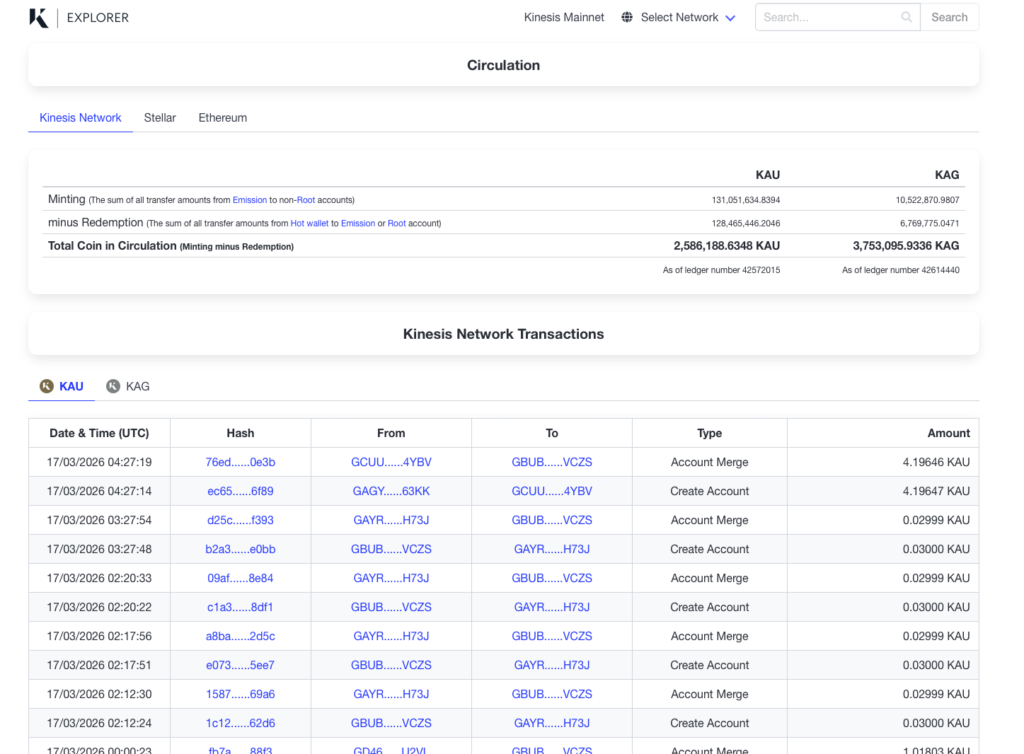
Right when you open it, you’ll see the big totals for KAU (gold) and KAG (silver) in circulation. As of mid-March 2026, it was showing something like 2.58 million KAU (roughly 2.58 tons of gold) and about 3.75 million KAG (around 3.75 million ounces of silver). These update as new blocks get confirmed.
You can also see the separate minting and redemption totals, so you can do the math yourself if you want.
Transaction History and Ledger Details
Below the summaries, there’s a feed of recent transactions. Each entry shows the asset type, amount, timestamp, addresses involved, and what kind of operation it was. You can scroll through or search by hash or other details. It’s not overwhelming, but it gives enough detail to follow the flow of tokens if you’re curious about recent activity or want to verify something specific.
How It Ties Into Audits
The explorer plays a practical role during the twice-yearly physical audits by Inspectorate International (part of Bureau Veritas). Auditors can take a snapshot of the blockchain at a particular ledger number and cross-check it against what they count in the vaults. The published reports then confirm whether the numbers line up.
Having this data public and always available means you don’t have to wait for the next audit report. You can watch trends yourself—steady growth in circulation, occasional redemptions, that sort of thing.
The Tech Behind It
It’s built on a customized version of the Stellar blockchain, with separate ledgers for gold and silver. That keeps things efficient and relatively cheap to use, which fits with tokens meant for actual transactions rather than just holding. The interface is clean and straightforward—nothing too technical for everyday use, though developers can dig deeper with Stellar’s tools if needed.
Why It’s Useful Day to Day
For people using the system—whether earning yields, trading, or spending via card—this tool offers a bit of peace of mind. You can see that redemptions actually reduce the supply as expected, or just keep tabs on overall activity. Yields depend on accurate circulation tracking, so visible data helps there too.
In the bigger picture of tokenized precious metals, having an open explorer like this is one way to add some extra trust on top of the physical audits and vault partnerships. It won’t replace due diligence, but it’s a solid, no-frills resource for checking the on-chain side of things. If you’re already involved with Kinesis, it’s worth bookmarking and glancing at every now and then.