

Allocated Bullion Exchange vs. Kinesis Exchange
Within the Kinesis Monetary System, the Allocated Bullion Exchange (ABX) and the Kinesis Exchange perform different roles. One handles the wholesale physical side of the market; the other is the trading platform that most users see.
The Allocated Bullion Exchange is the institutional marketplace that operates in the background. It is an electronic exchange focused on allocated physical precious metals. ABX runs a wholesale market that links 11 major trading centres and provides services such as price discovery, clearing, storage and delivery through its MetalDesk platform. Its main role is to supply the physical infrastructure, liquidity and custody arrangements that support the wider system. Physical gold and silver are acquired through ABX, held on an allocated basis (so that the owner has full legal title), and made available for the creation of Kinesis digital currencies. The platform is aimed at professional participants such as refiners, dealers and institutional investors, and it covers the full cycle of physical trading and storage.
The Kinesis Exchange, by contrast, is the digital asset trading platform that most users access. It sits inside the Kinesis interface and allows people to buy, sell and swap assets including KAU (the gold-backed token), KAG (the silver-backed token), cryptocurrencies such as Bitcoin and Ethereum, stablecoins and fiat currencies. Users do not handle physical bullion on this platform; they trade digital versions of the assets and other financial instruments. For most people it is the main place for day-to-day transactions and managing holdings.
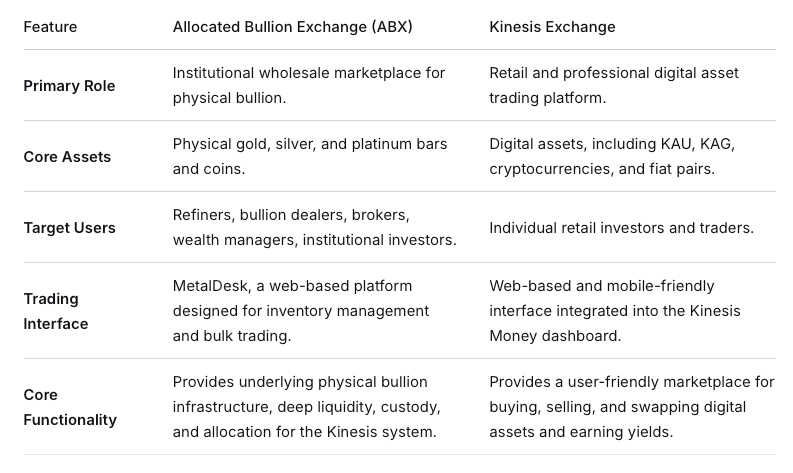
In practical terms, ABX runs the wholesale physical bullion market and the infrastructure that backs KAU and KAG with allocated metal, while the Kinesis Exchange is the venue where those digital assets (and other currencies) can be traded. The two platforms work together but operate at different levels of the system.