
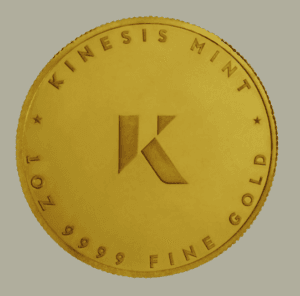
Table of Contents
The Role of the Istanbul Refinery and Mint in the Kinesis Ecosystem
While Kinesis’ main activity is the issuance and circulation of gold- and silver-backed digital currencies, the company also manufactures and sells its own coins and bars through the Kinesis Bullion store. This dual approach reflects a core idea: making gold and silver work as functional currencies on digital payment rails does not rule out their role as stores of value in the form of privately held bullion.
The Kinesis Mint and Refinery in Istanbul is a 5,600-square-metre, ISO-certified physical production facility that opened in 2021. It refines and mints investment-grade gold and silver bullion with a minimum fineness of 9999 for gold and 999 for silver. Capacity reaches up to 100 kilograms of gold refined per day and 200,000 pieces produced per week or month. The facility makes the official Kinesis bullion range sold through the Kinesis Bullion store and also offers custom minting and refining services for wholesale, institutional, and government clients.
Although they share the same name (“Kinesis Mint”), the Istanbul facility should not be confused with the system that issues KAU and KAG. The Kinesis naming team has never been afraid of a little ambiguity. The physical mint operates independently from the digital issuance mechanism.
Integration Within the Kinesis Monetary System
The facility sits at the physical foundation of the ecosystem rather than acting as a direct issuer of KAU or KAG. Bullion produced or refined in Istanbul can enter the broader ABX Quality Assurance Framework (QAF) network of approved metal. Once it meets ABX specifications—including chain-of-integrity documentation—it may be vaulted in the global network, including the Istanbul vault location itself, and become eligible for tokenization through Exchange Physical for Digital (EPD) processes or for backing existing circulating units.
Not every bar that underpins KAU and KAG comes from this facility; the system draws on multiple approved refiners and vaults in locations that include Dubai, Hong Kong, London, Zurich, and others. Still, metal that does come from Istanbul benefits from fewer counterparty layers because the same organisational group controls refining, assaying, and the later digital issuance pathways.
All metal, whatever its origin, remains subject to the same independent biannual audits, full allocation, and insurance standards that support the 1:1 backing of KAU and KAG.
Benefits of the Kinesis Mint for the KMS
As already mentioned, not every bar that backs KAU and KAG comes from this facility, but the portion that does brings several practical effects.
Vertical Integration and Counterparty Exposure
For metal refined on site, the same organisation that later issues the digital token is also the one that checks the bar’s purity and weight before it leaves for a vault. The chain of custody—from incoming material through refining, casting, and eventual storage—stays inside one set of operations. This removes external parties from the sequence, lowering counterparty exposure and the risks that come with relying on third-party providers for quality assurance. In more traditional setups a platform often depends on outside refiners for both supply and certification; here that particular link is handled internally for the bars produced in Istanbul. The internal control gives greater certainty over the quality and integrity of the metal that enters the system from this source.
Internal Records and Audit Trails
Because the refining step takes place under the operator’s own quality systems, the documentation for those bars can begin at the moment of refining and continue without a break. This creates a continuous, unbroken chain of custody that improves transparency and traceability. When Inspectorate International (Bureau Veritas) carries out its twice-yearly physical inspections, the auditors are examining metal that was processed and certified inside the same organisation’s framework. This does not replace independent verification—the audits remain rigorous and external. It simply means the internal records the auditors consult are more continuous and less dependent on information passed on by separate suppliers, which streamlines the verification process and gives auditors more comprehensive documentation to review.
Support for Redemptions
A platform that has to source all its physical metal from third-party refiners can run into delays, capacity limits, or disagreements over quality that slow or complicate redemptions. Having refining capacity in-house gives a degree of control over part of the supply chain and therefore greater flexibility when users request physical delivery of their holdings. It does not guarantee that every redemption will be filled from Istanbul bars—the system draws on multiple vault locations and refiners worldwide—but it does mean the operator is not entirely dependent on external production schedules when holders ask for physical delivery. This capacity helps make redemption requests more reliable by reducing external dependencies that could introduce delays or complications.
Physical Products as an Entry Point to the KMS
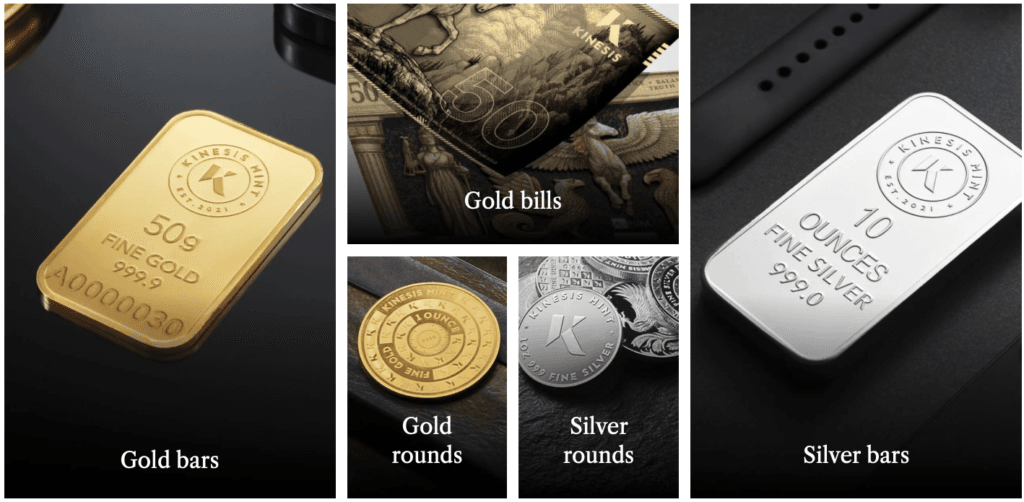
The facility also produces conventional bullion coins and bars that are sold directly through the Kinesis Bullion store. These products appeal to people who simply want to hold physical gold or silver rather than tokens—the traditional bullion buyer who may not yet feel comfortable with digital assets. For some buyers a coin or bar may be their first contact with the Kinesis name, offering a tangible, familiar introduction to the brand. From there they can decide whether the digital side of the system interests them, and may convert their physical holdings into KAU or KAG and take part in the wider yield-bearing ecosystem. In that sense the refinery serves both the tokenised holdings and the traditional bullion market at the same time, creating a bridge between conventional precious-metals ownership and the modern digital monetary system.
Kinesis Mint ISO Certifications
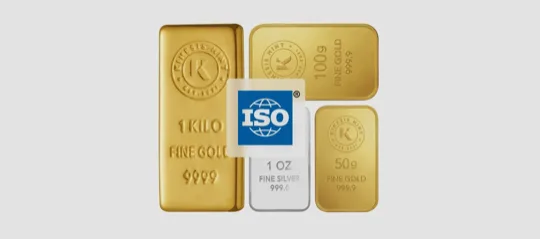
The Kinesis Mint has received three certifications from the International Organisation for Standardisation (ISO). They cover quality management, environmental management and occupational health and safety.
The Certifications
ISO 9001:2015 deals with quality management systems. It confirms that the mint keeps written procedures for how it produces and handles bullion, with the aim of keeping results consistent.
ISO 14001:2015 looks at environmental management. This includes how resources are used, how waste is handled and how the facility’s activities affect the surrounding environment.
ISO 45001:2018 concerns workplace health and safety. It requires the organisation to have systems in place for spotting occupational risks, managing them and reviewing those controls over time.
Certification Process
ISO certificates are not handed out automatically. An independent auditor checks the organisation against published international standards. The auditor goes through written documents, inspects records and looks at whether the stated procedures are actually followed on site. Once issued, the certificates remain subject to regular surveillance audits so that continued compliance can be verified.
What The Certifications Indicate
The certificates give outside confirmation of the mint’s management systems. They do not change or describe the physical properties of the bullion itself. For customers and institutional buyers they show that recognised processes are in place for quality control, environmental handling and worker safety.
Connection To US IRA Eligibility
The ISO 9001:2015 certificate also has a bearing on US Individual Retirement Arrangements. IRS rules for precious metals that can be held inside these accounts require the metal to come from a recognised refinery and to meet minimum purity levels—9999 for gold and 999 for silver.
Kinesis bars and rounds already reach those purity thresholds. With the quality-management certification in place, the products also meet the recognised-refinery condition. Eligible items can therefore be held inside IRA accounts.